
June Issue
|
BooksBeat
Basic
|
|
Women Turning To Piracy
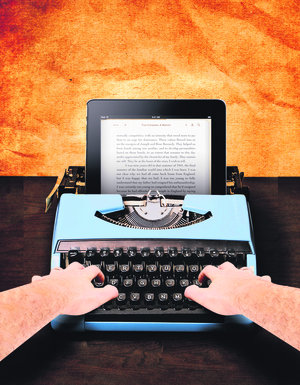
Older women are taking to digital piracy as never before as a result of e-reader and tablet ownership, according to new figures.
News that a group formerly unwilling to infringe copyright are changing their behaviour as e-books take off will worry publishing executives, who fear they could suffer similar a similar fate to the record labels that have struggled to replace lost physical sales.
The picture across the entire e-reader and tablet markets is even more troubling for the publishing industry. Some 29 per cent of e-reader owners of both genders and all ages admit piracy. For tablets the figure rises to 36 per cent.
The findings are part of the Digital Entertainment Survey, an annual assessment of consumer behaviour online by the law firm Wiggin. Telegraph
Stars Writing "Their" Fiction
by Julie Bosman, NYT
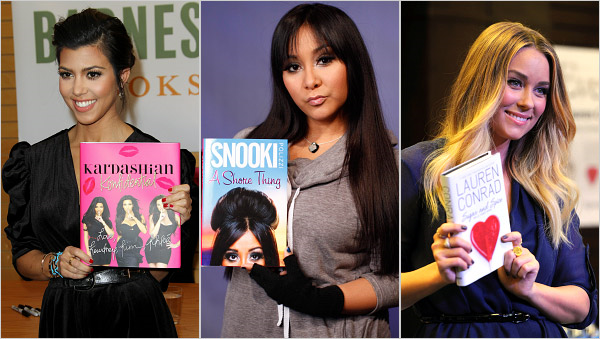
“As wild as our real lives may seem on TV, just wait to read what we’ve dreamed up to deliver between the covers of our first novel,” Kourtney, Kim and Khloé said in a statement last week, announcing that William Morrow, an imprint of HarperCollins, would publish a novel they had written.
And why not? Nicole Richie has had two novels published. Hilary Duff released her first novel, “Elixir,” last year. Lauren Conrad, the blond reality starlet, just landed a deal with HarperCollins to write a trilogy about a scheming, backstabbing Hollywood princess named Madison. Nicole Polizzi, otherwise known as Snooki of the MTV show “Jersey Shore,” published a novel in January, despite telling The New York Times last year that she had read only two books in her life. Her book, “A Shore Thing,” quickly landed on the New York Times best-seller list.
Like a branded fragrance or clothing line, the novel — once quaintly considered an artistic endeavor sprung from a single creative voice — has become another piece of merchandise stamped with the name of celebrities, who often pass off the book as their work alone despite the nearly universal involvement of ghostwriters. And the publishing industry has been happy to oblige.
“Publishers are smart enough to cash in where it’s appropriate,” said Ira Silverberg, a literary agent. “The question, I think, for many of us is: Is it simply commerce and we should laugh it off? Or does it take a slot away from a legitimate writer?”
Changing Face of Novels
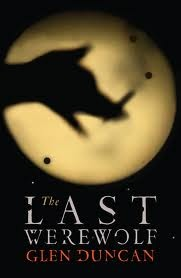
Jake is a melancholy, erudite Londoner who chain-smokes Camels and downs single-malt Scotch. When the moon waxes full, he sprouts fur and fangs and a lusty appetite for human flesh.
Mr. Duncan, a 45-year-old novelist who lives in South London, invented Jake out of desperation. His previous seven literary novels sold poorly, and his agent said the prospects for selling the next one were bleak. "It was a rather mercenary and practical decision to try to write a straight genre novel," Mr. Duncan says. What started as a supernatural page-turner became a strange hybrid: a high-concept literary novel, starring a narrator who could perhaps be described as Humbert Humbert with fur.
The gambit worked. The novel sold in 18 countries. Knopf bought an entire werewolf trilogy—Mr. Duncan is currently finishing the sequel—and plans to release the first novel in July. Ridley Scott, director of films like "Alien" and "Blade Runner," optioned the film rights. "Thus far, it's been the smartest move I've made," Mr. Duncan says.
Something strange is happening to mainstream fiction. This summer, novels featuring robots, witches, zombies, werewolves and ghosts are blurring the lines between literary fiction and genres like science fiction and fantasy, overturning long-held assumptions in the literary world about what constitutes high and low art. Following a string of supernatural successes, including last summer's hit "The Passage," a vampire epic by literary novelist Justin Cronin, and the recent surprise breakout "A Discovery of Witches" by Deborah Harkness, novelists from across the literary spectrum are delivering fantasy-tinged narratives.
E-books Spark Self-Publishing Revolution
by Noah Homola
Eisler, a former CIA agent and technology lawyer who gave up the profession to write thrillers, instead chose to break a long-held taboo: self-publishing.
“You can classify my reasoning as financial and non-financial,” he says, “For financial reasons, I think I’ll make more money in the long-term. The non-financial reasons have to do with just control of my own business and the ability to make my own decisions.”
A decade ago, turning down any amount of money — let alone half a million dollars — to self-publish would have been career suicide. For every James Redfield — the once self-published author who found success with “The Celestine Prophecy” — there were countless other self-publishing authors trying to get noticed by both readers and publishers.
“Ignoring self-published books and paying attention to traditionally published books was a rational thing to do,” Eisler says. “Most of them were by people who couldn’t get their books published otherwise, and they weren’t very good.”
Self-publishing may have remained a harmless sideshow had it not been for the shift in how readers read. Successes of e-readers and tablets such as the Kindle, Nook and iPad, along with online inexpensive digital distribution services such as Smashwords and Create-Space, have given writers the ability to sell their books through the same retailers as the big publishing houses.
“That’s a great opportunity,” Kirsty Melville, president and publisher of the book division at Kansas City-based Andrews McMeel, “but I think it’s on the margins. In other words, there are people who would never have their book published by a publisher who can have it distributed now as an e-book.”
So why would an author choose to go the traditional publishing route?
“Scale,” Melville says, referring to the network of bookstores and distributors a publishing house has access to. “Publishers exist to facilitate writers to write and take the logistics out of the process.”
Oftentimes, a self-publisher won’t have the resources of a publishing house.
“You don’t have a team of people behind you doing the investment in the design,” she says, “or the technology and online and the social media marketing that a publisher can provide.” But some find a way.
A year ago, 26-year-old Amanda Hocking worked at an assisted living facility but spent her evenings writing fantasy novels. After failing to find a publisher willing to take her on, she uploaded one of her novels to Amazon.com and began to promote it through her blog and other social networking sites, setting the Kindle e-book price at 99 cents. She has since self-released eight more books on Amazon that have earned her more than $2 million, despite none being priced above $2.99. In March, she made another $2 million by signing a contract for her next four books with St. Martin’s Press, the same publishing house Eisler turned down.
Chrichton Last Book Scheduled
Now HarperCollins has announced publication this fall for the completed version of that manuscript Crichton was working on before he died. Completed by Richard Preston, it will be published as MICRO, about a biotech company in Hawaii and the graduate students who end up stranded and endangered in a rain forest.
Preston says in the announcement, "Michael was writing at the top of his game, with a grand sense of adventure, into an eerie world that seems almost beyond imagining. For me, it was an irresistible challenge to finish the novel, and I was driven by a desire to honor the work and imagination of one of our time's most visionary and creative authors."
UK Kids Increasingly Illiterate
by Alison Flood
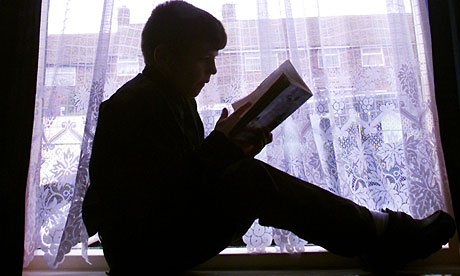
The survey of 18,141 young people found that four in 10 boys did not own any books, compared to three in 10 girls. Children who did not own books were two-and-a-half times more likely (19%) to read below their expected level than children who had their own books (7.6%), and were also significantly less likely (35.7%) to read above their expected level than book-owning children (54.9%). The online survey took place in November and December last year, with the majority of participants aged between 11 and 13 years old.
"People tend to think that literacy is an international development issue, [but] actually we have got massive literacy problems in this country," said Jonathan Douglas, director of the National Literacy Trust. "To be brutally honest we weren't expecting [the number of children without their own books] to be so high. We know that book ownership in this country is really strongly linked to literacy issues and social mobility."
The research found that "at a crude brushstroke", young people who do have books of their own are more likely to be girls, socio-economically better off, from white or mixed ethnic backgrounds and without a special educational need.
Douglas described the finding that boys are less likely to own books than girls as "part of a really worrying trend which has emerged particularly strongly in the last decade". "We are working with the Premier League and with anyone with a strong reach into boys' imaginations," he said. "It is a massive issue. Parents are more likely to buy books as presents if their child is a girl, mums are more likely to be seen reading than dads. It is impacting on boys' literacy levels – we know they are lagging behind girls significantly. It is strongly evident by 11 but emerges earlier. That lower level of literacy for boys is pulling down their achievement in all levels of the curriculum."
Children who don't own books "are less likely to have positive experiences of reading, less likely to do well at school and less likely to be engaged in reading in any form," according to the research. "It is not a case of books being irrelevant now technology has superseded printed matter," wrote the National Literacy Trust's researchers Christina Clark and Lizzie Poulton. "Children with no books of their own are less likely to be sending emails, reading websites or engaging with their peers through the written word on social networking sites. Children who grow up without books and without positive associations around reading are at a disadvantage in the modern world."
Douglas stressed that there was "no point at which it is too early" to support children in learning to love books. "It is not just something which starts the first day of a child's schooling," he said.
"Don't think it is basically up to the school to get a child reading. Everyone the child has contact with – parent, uncle, aunt, grandparent – has an active role to play in terms of supporting literacy."
Amazon Jumps into New Role
by Keith J. Kelly
The move comes at a time of tremendous upheaval in the business.
Book sales are down, major chain Borders may disappear from the retail landscape and Amazon reported earlier this month that ebook sales on its Kindle device are now outselling hardcover and paperback books in print.
So why then is Amazon founder Jeff Bezos venturing into the risky world of publishing? "Everyone is wondering what they are up to," said one executive yesterday at the BookExpo America, the annual book trade fair now underway at the Javits Center. Many had expected or feared a move by Amazon into frontline consumer publishing for months and the hiring of Kirshbaum -- and Amazon's tight-lipped lack of communication on the strategy -- has only fanned speculation.
Kirshbaum was a popular executive when he was heading Time Warner Publishing, before the group that included Warner Books and Little Brown imprints was sold to the Hachette Book Group and he left to open the LHK Literary Agency.
On Monday, Amazon revealed Kirschbaum was going to be the new publisher of its book publishing operation, but outlined very little about its plans.
Eisler among Amazon's First
"What Amazon has offered is everything that was so great to me about self publishing on the one hand, but everything you want from traditional publishing," including marketing and distribution. "I get the best of both worlds," he said.
Amazon is also paying Eisler an advance, one "that was comparable to what St, Martin's was offering in the deal I ultimately decided didn't make sense." They also given him "control over the packaging and consultation over the pricing of the book," with a royalty he called "much more favorable" than a traditional deal. (It's for world rights, and includes audio as well.)
The royalties offered for the print edition are also "comparable" to the St. Martin's deal, and Eisler suggested that "paper has become a subsidiary right" with "independent advertising value." He continued: "if you're an author who makes 70 percent of the unit price of the digital book, you might be inclined to sell your paper rights very cheaply so the publisher will blow out sales that will help sell your digital books."
To which Mike Shatzkin asked "does that mean Amazon accepts that having paper books in stores has such marketing value that they'll accept lower margin?" Eisler said that was the case, and that authors "will be motivated to sell their paper rights more cheaply and increase bookseller profit margins."
When an audience member asked about the nature of Amazon's contract, Eisler (who is trained as an attorney) said "I've never seen a better publishing agreement than what Amazon presented me. It's readable, it's understandable, and it's transparent."
In the following panel, however, ABA coo Len Vlahos took issue strongly with Eisler's contention that booksellers should be happy to sell low-priced print versions of books which Amazon publishes digitally. "Organizationally we could not disagree with Barry Eisler more." Vlahos objected to having "one entity basically use books as a loss leader and devalue books.... I applaud his innovation, but I think it's grossly misguided. If you do the math on what he is talking about, Amazon is going to lose a lot of money on their contract with him, and you have to wonder about that."
Doyle To Publish First Novel
by Emma Saunders, BBC
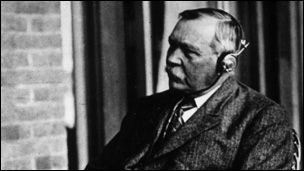
Conan Doyle sent it to a publisher but it was lost in the post and he then had to reconstruct it from memory.
It was never finished. The first Sherlock Holmes novel, A Study in Scarlet, was printed three years later.
Rachel Foss, lead curator of modern literary manuscripts at the British Library, is set to publish The Narrative of John Smith this autumn.
She said it had been part of the British Library's Conan Doyle collection since 2007 and realised it would make a good publishing project.
The Arthur Conan Doyle Literary Estate gave their consent to the plan.
Foss told the BBC the novel is "loose in plot and characterisation", as it was his first full-length effort, having written many successful short stories previously.
Although the writer made references suggesting he was embarrassed of this early work, Ms Foss says he worked on it again later in life suggesting he must have seen something worthy in the concept.
The novel sees John Smith ruminate on topics including politics and religion and also features several conversations with his boarding house landlady, Mrs Rundle.
"She is a Mrs Hudson in the making," Ms Foss says, referring to Sherlock Holmes's landlady. The novel was written while Conan Doyle was in his early 20s, just after he had moved to Southsea, near Portsmouth.
The 100 Greatest Nonfiction Books
Art The Shock of the New by Robert Hughes (1980) Hughes charts the story of modern art, from cubism to the avant garde The Story of Art by Ernst Gombrich (1950) The most popular art book in history. Gombrich examines the technical and aesthetic problems confronted by artists since the dawn of time Ways of Seeing by John Berger (1972) A study of the ways in which we look at art, which changed the terms of a generation's engagement with visual culture
Biography Lives of the Most Excellent Painters, Sculptors, and Architects by Giorgio Vasari (1550) Biography mixes with anecdote in this Florentine-inflected portrait of the painters and sculptors who shaped the Renaissance The Life of Samuel Johnson by James Boswell (1791) Boswell draws on his journals to create an affectionate portrait of the great lexicographer The Diaries of Samuel Pepys by Samuel Pepys (1825) "Blessed be God, at the end of the last year I was in very good health," begins this extraordinarily vivid diary of the Restoration period Eminent Victorians by Lytton Strachey (1918) Strachey set the template for modern biography, with this witty and irreverent account of four Victorian heroes Goodbye to All That by Robert Graves (1929) Graves' autobiography tells the story of his childhood and the early years of his marriage, but the core of the book is his account of the brutalities and banalities of the first world war The Autobiography of Alice B Toklas by Gertrude Stein (1933) Stein's groundbreaking biography, written in the guise of an autobiography, of her lover
Culture Notes on Camp by Susan Sontag (1964) Sontag's proposition that the modern sensibility has been shaped by Jewish ethics and homosexual aesthetics Mythologies by Roland Barthes (1972) Barthes gets under the surface of the meanings of the things which surround us in these witty studies of contemporary myth-making Orientalism by Edward Said (1978) Said argues that romanticised western representations of Arab culture are political and condescending
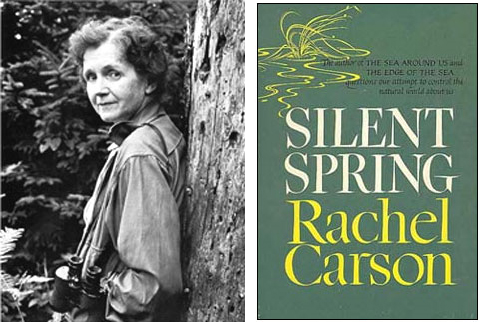
Environment Silent Spring by Rachel Carson (1962) This account of the effects of pesticides on the environment launched the environmental movement in the US The Revenge of Gaia by James Lovelock (1979) Lovelock's argument that once life is established on a planet, it engineers conditions for its continued survival, revolutionised our perception of our place in the scheme of things Bits & Bytes Thousands More Listings for AmSAW PROFESSIONAL MEMBERS Today
FICTION Debut Alex Myers's REVOLUTIONARY, the story of Deborah Sampson, who disguised herself as a man and served undetected for a year and a half in the Continental Army during the American Revolutionary War, by Sampson's transgendered direct descendent, to Anjali Singh at Simon & Schuster, at auction, in a good deal, by Alison Fargis at the Stonesong Press (NA).
Paranormal Joanne Reay's ROMEO STRIKES, in the new Lo'Life supernatural fantasy trilogy, to Simon Petherick at Beautiful Books, for publication in August 2011 (World).
Thriller Simon Lelic's THE CHILD WHO, about the attorney assigned to defend a child murderer, and how this heated, very public case seals the fate of his family's life, again to Kathryn Court at Penguin, for publication in Winter 2012, by Zoe Pagnamenta at Zoe Pagnamenta Agency on behalf of Caroline Wood at Felicity Bryan Associates (NA). Translation: Andrew Nurnberg
Women's/Romance NYT bestselling author Maya Banks's next three Scottish historical romances, to Kate Collins at Ballantine, in a significant deal, by Kimberly Whalen at Trident Media Group.
General/Other Chad Kultgen's THE AVERAGE AMERICAN MARRIAGE, a sequel to The Average American Male, to Cal Morgan at Harper Perennial, in a six-figure deal, in a two-book deal, by Alex Glass at Trident Media Group (World).
Marsha Skrypuch's MAKING BOMBS FOR HITLER, a middle grade story of the children used as slave labour in Germany's private and military industry during WWII, to Diane Kerner at Scholastic Canada, by Dean Cooke of The Cooke Agency (NA).
NONFICTION Advice/Relationships Author of Always Talk to Strangers, David Wygant's NAKED: HOW TO FIND THE PERFECT PARTNER BY REVEALING YOUR TRUE SELF, showing readers how to find their deepest truth and love themselves unconditionally while releasing fears and insecurities, and stopping self-sabotaging behaviors as the basis of finding their ideal partner, to Jill Kramer at Hay House, by Michael Ebeling at Ebeling and Associates.
Biography Larry Gibson's YOUNG THURGOOD: Early Years of a Great Lawyer and Supreme Court Justice, providing new information on Marshall's formative years in Baltimore, the role of his family and their emphasis on education in developing his later views, the work habits that emerged during his early life, and his decision to devote his career to combating racial discrimination, with a foreword by Thurgood Marshall Jr., to Steven Mitchell at Prometheus, for publication in Spring 2012, by Elizabeth Evans at the Jean V. Naggar Literary Agency (NA).
Diet The Atkins Nutritional Team headed by Colette Heimowitz's THE NEW ATKINS FOR A NEW YOU COOKBOOK: 200 Dellicious Low-Carb Recipes You Can Make in 30 Minutes or Less, a follow up to the bestselling 2010 update of the classic diet brand offering quick, tasty recipes for today's Atkins lifestyle including vegetarian options, to Michelle Howery for Touchstone, for publication in January 2012, by Joy Tutela at David Black Literary Agency.
Illustrated/Art Authors of The Exquisite Book Julia Rothman, Matt Lamothe, and Jenny Volvovski's THE ART OF SCIENCE, an artistic celebration of the wonders of natural world, in which a roster of 75 contemporary artists create new work inspired by informative science text, to Bridget Watson Payne at Chronicle, in a nice deal, for publication in Fall 2012 (World).
Cinematographer and director John Guntzelman's THE CIVIL WAR IN COLOR, featuring 200 photographs, to Barbara Berger at Sterling, by Kathryn Green Literary Agency (world).
Lifestyle One of the stars of Bravo's upcoming series, Million Dollar Decorators Nathan Turner's untitled lifestyle and interiors book, to Rebecca Kaplan at Abrams, in a pre-empt, for publication in Fall 2012, by Andrea Barzvi at ICM.
Memoir NYT bestselling author of The Fortune Cookie Chronicles Jennifer 8. Lee's CAN I HEAR ME NOW?, an examination of our tech-saturated culture, in which a journalist, in the wake of a serious breakup, struggles to develop deeper connections with others and herself, even as she is hyper-connected to thousands of "friends" and "followers" in her social media circle, to Sarah Knight at Simon & Schuster, in a good deal, by Larry Weissman (World English).
Narrative Jonathan Grotenstein and Storms Reback's SHIP IT HOLLA BALLA: How a Group of 19-Year-Old College Dropouts Used the Internet to Become Poker's Craziest, Loudest and Richest Crew, pitched as "part Social Network, part Tucker Max," the story of the early days of online gambling and how, inspired by accountant Chris Moneymaker's out-of-nowhere win of the world series of poker, a group of young internet poker upstarts became fast friends, moved into a Vegas mansion, and took on the old poker establishment, to Marc Resnick at St. Martin's, by Daniel Greenberg at Levine Greenberg Literary Agency (NA).
Science Scientific American reporter Katherine Harmon's OCTOPUS!, an exploration of our scientific and cultural fascination with the reclusive, allegedly psychic, arguably delicious eight-armed cephalopod, to Courtney Young at Current, by Meg Thompson at LJK Literary Management (World).
|

More Breaking Book News
The following book-industry
news appears in real-time as it becomes
available in order to meet your ever-expanding need to know
what's happening (and to whom) on Publisher's Row.
| Books & Authors - MagPortal.com |
|
|