
July Issue
|
BooksBeat
Basic
|
|
More Publishers Look to Erotica
by Charlotte Williams
Fiction editorial director Maxine Hitchcock said: "With this rise in interest in erotica, we thought this was a fantastic opportunity. Sometimes in the context of a traditional book, less is more, but we never wanted to bin any of the scenes." She said the idea of publishing deleted scenes could have potential outside the genre, perhaps in publishing richer description of SFF worlds.
Meanwhile, Orion deputy publisher Jon Wood and editor Jemima Forrester paid a six-figure sum for UK and Commonwealth rights, excluding Canada, in the Eighty Days erotica trilogy from agent Sarah Such. The titles are written by Vina Jackson, a pseudonym of two writers, one well-known, working together for the first time, with the story focusing on the "sexually charged relationship between two strangers".
The first title, Eighty Days Yellow, will be published on 19th July in mass market paperback and e-book, followed by Eighty Days Blue and Eighty Days Red later this year.
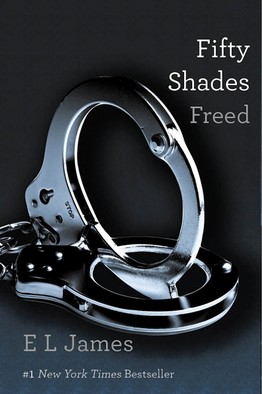
Twenty Million Shades Goes Overseas, Too!
by Jeffrey A. Trachtenberg
"It's entered the cultural conversation, which has made the trilogy much bigger than books often are," said Anne Messitte, publisher of Vintage Books, an imprint of Bertelsmann AG's Random House Inc., which released the titles in the U.S.
As of July 2, the trilogy, starting with "Fifty Shades of Grey," had sold 19.4 million copies in both print and e-book form since its U.S. publication in March. The trilogy ranked first, second and third on The Wall Street Journal's best-seller list published on Saturday.
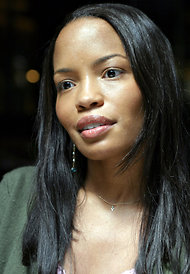
Erica Kennedy, Hip-Hop Satirist, Dead at 42
Published by Miramax Books, Bling tells the story of a young, innocent mixed-race woman trying to break into the music business. A gifted singer, she is remade in flashy style by a rapacious record mogul. Kennedy was reported to have received an advance of half a million dollars for the novel.
“Everybody kept talking about how scandalous that book was,” Kennedy told The New York Times in 2004. “I really didn’t see the big deal. I knew I could write a story about a P. Diddy party and show these people what scandal is really all about.”
Reviewing Bling in The Times Book Review, Sia Michel took it to task for bagginess (it ran to 509 pages) but called it “gleefully trashy.” The book captured the attention of the news media, partly for its portrayal of a world of flowing Cristal, powder-blue Bentley limousines, and platinum teeth and partly for the fevered guessing game it engendered: Was its hip-hop mogul based on Russell Simmons, a founder of Def Jam Recordings and a friend of Kennedy? Was its foul-tempered supermodel a thinly veiled Naomi Campbell?
Although only one person knows for sure, Kennedy remained silent. The author's second novel, Feminista, was published by St. Martin’s Press in 2009. A reworking of Shakespeare’s Taming of the Shrew, it failed to attract the attention of Kennedy's first book.
Kennedy is generally acknowledged to have taken white suburban chick lit and given it a distinct black wrapper, a feat that did not go unnoticed within the black community. At the end of 2010, she was named to the Ebony Power 100, a list of influential African-Americans.
Kennedy was born Erica Kennedy Johnson on March 24, 1970. Raised in Bayside, Queens, her father, a pharmaceutical company executive, died when she was 17; her mother was an interior designer.
As a teenager, Erica dated a record producer and through him met Simmons, who gave her an introduction to the inner circles of hip-hop. In 1998, Kennedy returned the favor by acting as a bridesmaid at Simmons’ wedding to Kimora Lee.
After receiving a bachelor’s degree in liberal arts from Sarah Lawrence College in 1992, Kennedy worked as a publicist for the Tommy Hilfiger fashion house while contributing articles on music to Vibe, InStyle, and other magazines.
Kennedy’s survivors include her mother, Mary Mobley Johnson, and a brother, Kirk Johnson.
As film critic Roger Ebert tweeted after learning the news of Kennedy's passing, "The world is a lesser place."
Author Turns First To Kickstarter
His recommended "no-brainer" package was fully subscribed with 800 backers at $111 each (and 3 of the 4 higher-priced packages are also filled). That's about the same number of backers who have now elected for the least expensive $4 digital preview only--with the former generating almost $89,000 and the latter accounting for only about $3,300 in sales. It would take over 22,000 cheap previews to equal the revenue from those higher-priced pledges.
Netting More Writing Jobs Without Getting Caught
Book Publishers. Steer clear of startup publishing companies that offer no advance but a "new way of doing business" or an "improved publishing model more respectful of new writers." These are euphemisms for "You work your tail off, and we'll collect the rewards." Even small indie publishers pay modest advances plus royalties. If they're legit, they'll act legit.
Magazine Publishers. Some smaller rags try to get good freelance material in exchange for author's copies (usually 3 - 5 copies of the issue containing the author's writing). Don't fall for it. If your work is good enough to get published, it's good enough to get published for pay. Why make money for some editor who has no respect for what you do for a living?
Ghosting/Editing. Stay away from Craigslist ads promising, "This is easy work for someone who knows what he's doing." That's mumbo-jumbo for "No writer is worth paying any more than absolutely necessary." If writing was so easy, the advertiser would do it himself.
Similarly, turn and run--don't walk!--from jobs promising pay in the form of future royalties or pay-per-click in which, the more your material is read, the more your material will earn. The bottom line here is that few of these sites ever generate any income for their writers, who end up writing for nothing.
Also, avoid writing for sites that don't pay or pay minimally but do promise to provide you with valuable credentials. Just how prestigious do you think a by-line on MommyWorksFromHome dot com will seem to an editor at The New York Times or Simon and Schuster?
Likewise, avoid responding to ads that are filled with typos or that seek multiple writers. They're usually synonymous with word farms, which is a nice euphemism for "pays peanuts."
Finally, never provide specific writing examples as a sample of what you can do. If someone asks you to write three articles critiquing three current Hollywood releases, you can bet your bottom dollar you won't get the job, and your "samples" will appear somewhere on the Internet without your permission--or your byline.
By taking just a few simple precautions, you'll find you're a lot happier, a lot wiser, and a lot wealthier writer.
Rielle Book Tour Shelved for Poor Sales
After a serious media blitz, which included interviews with ABC’s Chris Cuomo and appearances on The View and Piers Morgan Tonight, Hunter, who was confirmed to be the mother of Edwards’ daughter, Quinn, after months of denials by the disgraced former senator, has sold a scant 6,000 copies of her story, according to Bookscan.
The book, which pundits say should have been titled Who Really Cares, sold enough copies to crack the New York Times best-seller list but not enough to make the big-name New York publishing houses sorry they passed it by, according to Publishers Weekly.
A representative for Hunter insisted that “Rielle’s book tour has not been canceled. She completed her scheduled media appearances, and there are still requests that she’s considering.” But the rep also added that no other tour appearances are currently being entertained.
Hunter reportedly got a small advance from boutique publisher BenBella Books because larger publishers feared women would shy away from buying it.
Nine Signs Self-Publishing Is Out of Control
Digging for Gold: Researching Book Awards
"Submit your book for honors and awards," she said.
Good advice. Awards, after all, create buzz around your book. And buzz can only help sales.
But won't your publisher take care of submitting your new release to various award competitions? Maybe, and maybe not. While many larger publishers submit their A-List books to various competitions, few smaller publishers have the staff or the funds to do so. And even with large publishers, they rarely pull titles from their mid-list to submit. That's where the author comes in.
Of course, before you can submit your book for an award, you have to find the various award foundations. The best way to get up-to-date information is by running a search on Google. You'll want to run your search several months before your book's release date so you have plenty of time to make any deadlines associated with the submission date.
Start your search out with a general phrase such as "book awards," "history book awards," or "children's book awards." Then refine your search by adding the name of your home state after the search term. Try again searching with your country of citizenship. You can also search by region of the country in which you reside--the northwestern United States, for example, or southeastern Canada.
You can run a search for book awards offered via subject matter or genre. "Social justice book awards," for instance, or "feminism," "green energy," or "literary fiction."
And don't forget about searching under your race and religion. In these politically correct times, it's easy to forget that Jewish Heritage and Irish-Catholic awards exist to promote a better understanding of these groups of people.
Remember, too, that awards exist for self-published and POD books, as well as for books published by indie presses. Search using key words such as "independent book awards," "POD book awards," etc.
Once you've gathered a list of potential awards, send it to your publisher. If your publisher doesn't submit your book for an award, check the rules to see if you're eligible to do so yourself.
S&S Books To Feature QR Codes
Tech website Mashable Business quotes Ellie Hirschhorn, executive vice president and chief digital officer at S&S. "The QR code is a way to use the distribution of our physical books as a means to build our [subscriber] database. This direct-to-consumer relationship then enables us to market future books and authors more cost-effectively.
"For now, the codes will only be featured on hardcover and trade paperback books, and will be accompanied by a URL; so those without smart phones or QR code scanners can access the author’s page on the S&S website. The codes will be added to other formats later, based on their performance."
Despite the recent announcement of the idea, it has already been met with skepticism by some industry publications (including Paid Content, Mashable Business, and The Digital Reader), which say the QR code trend hasn’t fully caught on in North America, and that URLs are still the better option, as they can be accessed by all browsers. Bits & Bytes Get Thousands of Additional Listings for AmSAW PROFESSIONAL MEMBERS Today
FICTION Thriller A. G. Hayes's IMMINENT DANGER, the third book in the Falk/Koski thrillers, where an adored American pop singer dreams of a grand show of Islamic Jihad power, intending to use a biological weapon to eradicate religious leaders at an Easter service at the Hollywood Bowl and Cerberus agents seek help from unlikely sources: gang bangers, scientists and the public to stop a brutal terrorist attack on American soil, to Daniel Janik at Savant, for publication in 2013, by Gloria Koehler and Donna Eastman at Parkeast Literary.
Women's/Romance Kristine Rolofson's THE HUSBAND SCHOOL, in The Husband School series, in which the women of a small Montana town set out to train the single men to be appealing husband material, to Marsha Zinberg at Harlequin, in a nice deal, in a three-book deal, for publication in 2013, by Maria Carvainis of the Maria Carvainis Agency (world).
Children's: Middle grade Darlene Beck-Jacobson's THE CARRIAGE MAKER'S DAUGHTER, set in the early 1900s in Washington, DC, racial intolerance, social change and sweeping progress create a turbulent stage for a twelve-year old, who prefers Papa's carriage barn and the symphony of the blacksmith's hammer to the proper expectations of females, and finds the strength to defend what she believes in when her comfortable way of life is threatened by racist neighbors, pitched as reminiscent of Little House on the Prairie, the girl to Marissa Moss at Creston Books, in a nice deal, for publication in Fall 2014, by Liza Fleissig at Liza Royce Agency (World English).
Children's: Picture book Jenna McCarthy's LOLA KNOWS A LOT, about a little girl who knows a lot about a lot of things, but will she be ready for the new school year?, to Maria Modugno at Harper Children's, in a two-book deal, by Laurie Abkemeier at DeFiore and Company (World).
NONFICTION Biography Author of THE ONE: THE LIFE AND MUSIC OF JAMES BROWN, R. J. Smith's R.E.S.P.E.C.T.: THE LIFE, TIMES, AND LEGACY OF ARETHA FRANKLIN, a full-scale biography, rooting Franklin in the contexts that shaped her - her family and her Detroit community - and analyzing her contribution, influence, and cultural legacy, to Ben Schafer at Da Capo, for publication in 2015, by Paul Bresnick at Paul Bresnick Agency (world).
Business/Investing/Finance Executive Director of the Napoleon Hill Foundation Don Green's EVERYTHING I KNOW ABOUT SUCCESS I LEARNED FROM NAPOLEON HILL, the lessons he's learned from Hill's teachings on success in business and life, to Donya Dickerson at McGraw-Hill, for publication in Spring 2013, by Frank Weimann at The Literary Group International (World).
Humor Graphic designer and illustrator Becky Murphy's I'D RATHER BE SHORT: 100 Reasons Why It's Great to Be Small, humorous depictions of the advantages of being short, including being automatically awesome at hide-and-seek, having more legroom in the car, needing less time to shave legs, and dominating at the limbo, to Kate Napolitano at Plume, at auction, by Laurie Abkemeier at DeFiore and Company (world).
Science CUNY anthropologist Eugene Harris's ANCESTORS IN OUR GENOME, a look at how decoding the human genome has changed long-held views of the evolutionary relationships between humans and our closest primate relatives, with revelations about the genetic inheritance we share with other animals from elephants to songbirds, to Jeremy Lewis at Oxford University Press, in a nice deal, by Deirdre Mullane at Mullane Literary Associates (World).
|





More Breaking Book News
The following book-industry
news appears in real-time as it becomes
available in order to meet your ever-expanding need to know
what's happening (and to whom) on Publisher's Row.
| Books & Authors - MagPortal.com |
|
|