September
|
BooksBeat
|
|
After 48 Years, Julia Child Has Best Seller, Butter and All
by Stephanie Clifford
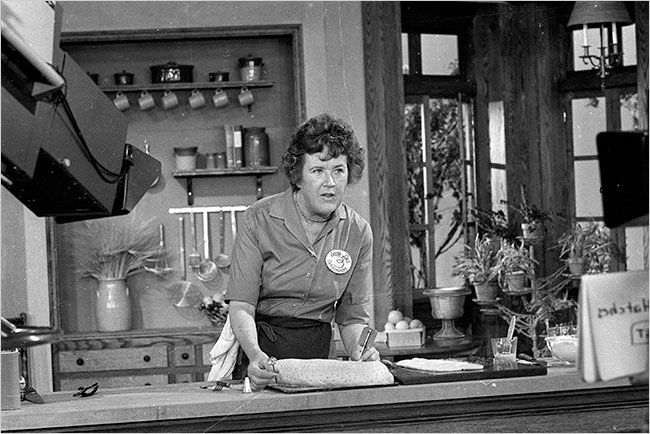
Almost 48 years after it was first published, “Mastering the Art of French Cooking” by Julia Child is finally topping the best-seller list, bringing with it all the butter, salt and goose fat that home chefs had largely abandoned in the age of Lipitor.
The book, given a huge lift from the recently released movie “Julie & Julia,” sold 22,000 copies in the most recent week tracked, according to Nielsen BookScan, which follows book sales. That is more copies than were sold in any full year since the book’s appearance, according to Alfred A. Knopf, which published it.
The book will make its debut at No. 1 on the New York Times best-seller list of Aug. 30 in the advice and how-to category.
“In a month, I’ve sold almost seven times what I sell, typically, in a year of ‘Mastering,’ and it’s going to get even higher,” said Lee Stern, the cookbook buyer for Barnes & Noble. “It’s amazing.”
Amazing not just because the book is almost half a century old, costs $40 and contains 752 pages of labor-intensive and time-consuming recipes — the art of French cooking is indeed hard to master — but also for what those recipes contain.
In a decade when cookbooks promise 20-minute dinners that are light on calories, Ms. Child’s recipes feature instructions like “thin out with more spoonfuls of cream” (Veau Prince Orloff, or veal with onions and mushrooms, pages 355-7) or “sauté the bacon in the butter for several minutes” (Navets à la Champenoise, or turnip casserole, pages 488-9). And for a generation raised to believe that Jell-O should have marshmallows in it, there is plenty of aspic — the kind made with meat.
Readers who only recently opened the book, and have been blogging and tweeting about it, have found some anachronistic surprises.
“I’m looking at these ingredients going, Oh, sweet Lord, we’ll die,” said Melissah Bruce-Weiner, 45, a resident of Lakeland, Fla., who bought the book on her way home from seeing the movie. Horrified by the prospect of cooking with pork fat, she tried her own variation of boeuf bourguignon, which she called “beef fauxguignon.”
“I know why all of the greatest generation has died of heart attacks,” she said. “I actually did a can of cream of mushroom soup, and a can of French onion soup, and a can of red wine — it was the same can — I filled it with the bottle that I had been drinking the night before. “Yes, Julia Child rolled over in her grave when I opened the cream of mushroom soup, I’m pretty sure of that. But you know what? That’s our world.”
Mindy Lockard, 34, of Eugene, Ore., made Poulet Sauté aux Herbes de Provence, which calls for a whole stick of butter, for a recent dinner party.
“I found the recipes, actually, much easier than I thought they were going to be, but the amount of butter was a bit overwhelming,” she said. “There’s a picture of me cooking, and I have this glow, and it’s from too much hot butter. I expected to break out the next day.
“My husband loved it and asked if we could have it again the next day. I actually said, we probably shouldn’t have this in the same month.”
Ms. Child, who died in 2004 at the age of 91, liked to say, “ ‘Oh, butter never hurts you,’ ” her editor, Judith Jones, recalls. “In this country, we sort of have a love-hate relationship with food — we love it, but we’re also afraid of this whole fear-of-fat mania.”
Mireille Guiliano, the author of “French Women Don’t Get Fat,” said there are reasons why American and French bodies respond differently to the same fatty ingredients.
For starters, the French eat more fruits and vegetables, and they walk more, she said. And then there is portion size. “The French simply eat much less,” she said.
They're No Bodice-Rippers, but Amish Romances Are Hot
by Alexandra Alter
NEWBURG, Pa. -- Rachel Esh, owner of an Amish dry-goods store here, was giddy as customers kept arriving. Cars spilled out of the dirt parking lot onto the hay and potato fields, crushing a few of her neighbor's potatoes.
She ushered the crowd of 40 people swarming in front of her cash register into a line that snaked out the door of Rachel's Country Store. The cause of the commotion: novelist Cindy Woodsmall, who had stopped by to autograph books.
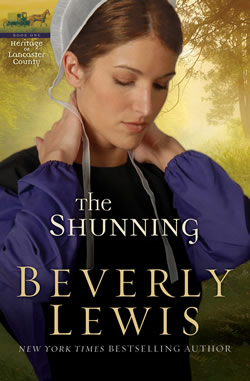
The plot of 'When the Heart Cries,' revolves around Hannah, a young Amish woman who falls in love with a Mennonite and hides her plans to marry him from her strict parents. The lovers kiss a couple of times in 326 pages.
Ms. Woodsmall writes "bonnet books," or Amish love stories, which are a booming new subcategory of the romance genre. The books, written by non-Amish writers, are aimed at a mainstream audience. But Ms. Woodsmall researches her stories among the Pennsylvania Amish, and she has a loyal Amish following.
The plot of her 2006 novel, "When the Heart Cries," revolves around Hannah, a young Amish woman who falls in love with a Mennonite and hides her plans to marry him from her strict parents. The lovers struggle to overcome the cultural divide, and actually kiss a couple of times in 326 pages: "His warm, gentle lips moved over hers, and she returned the favor, until Hannah thought they might both take flight right then and there. Finally desperate for air, they parted."
"I can't stop reading them," said Mary Ann Blank, an Amish woman with a wide smile and graying hair she wears neatly parted under her prayer cap. She clutched her signed copy of the third book in Ms. Woodsmall's "Sisters of the Quilt" series, published by WaterBrook Press, a Random House imprint. "I usually better not start in the morning because then I sit around too long," she added.
Most bonnet books are G-rated romances, often involving an Amish character who falls for an outsider. Publishers attribute the books' popularity to their pastoral settings and forbidden love scenarios à la Romeo and Juliet. Lately, the genre has expanded to include Amish thrillers and murder mysteries. Most of the authors are women.
Mag Editors Going
Random House surprised the publishing industry Monday with the hiring of GQ executive editor Andy Ward, who will be joining the editorial staff of the house’s flagship imprint in mid-September. Though Mr. Ward began his career in letters as an editorial assistant at Little, Brown, he has spent the past 13 years working in magazines—the most recent six at GQ, and the seven before that at Esquire. Mr. Ward is just one of several magazine editors who have made the jump into the book business during the past year and a half, a trend that made us wonder: Just how different is the life of a magazine editor from that of a book editor, and do the people who trade one in for the other know what they’re getting into?
And so, having conducted interviews with a number of publishing people who began their careers in the magazine world, we’ve come up with the following crib sheet for Mr. Ward and anyone else who follows in his footsteps:
1. At least initially, the slow pace might make you miserable. Martin Beiser, a senior editor at the Free Press who worked at GQ until 2003, said his “knees buckled” when he realized upon winning his first book at auction that it would take three years to see the result. Simon & Schuster publisher David Rosenthal, who worked at New York and Rolling Stone before coming to Random House in the mid-1980s, recalled once getting a call from Manhattan Inc. founding editor Jane Amsterdam in 1987, shortly after she took a job at Knopf: “She said something to the effect of, ‘Where do you get your satisfaction from here? It takes so long from the time you sign something up to the time you actually see it. Where does the rush come from?” And I remember saying to her—and her agreeing—that you had to get a big part of the adrenaline rush, the high, from the pursuit and the signing of the book.” Added David Hirshey, who was the longtime deputy editor of Esquire before joining HarperCollins in 1998: “In a monthly magazine, you work four to six weeks out. In books, four to six weeks are some people’s idea of lunch.”
2. Being a book editor means being a salesman. Daniel Menaker, who spent 25 years at The New Yorker before taking a job as “senior literary editor” at Random House in 1995, was stunned when he realized how much of his new gig consisted of pitching and hawking the books he wanted to publish, starting when he got them in on submission and ending when he wrote the catalog copy. “I knew it would be like that in the abstract, but not in the concrete,” Mr. Menaker said. “And the concrete was very hard when I hit it.”
3. There are way more meetings in publishing. Barbara Jones, who left MORE magazine for a job at Hyperion last year and has since become the editorial director there, said the number of meetings was, and continues to be, the biggest culture shock to her. “I’m always conscious of it: Am I supposed to be in a meeting? Am I supposed to be in a meeting? Am I supposed to be in a meeting right now?” she said.
4. Though your extensive contacts and relationships with writers are part of the reason you got hired, don’t expect everyone who wrote for you to automatically sign with you. “No matter how close the relationship you have with somebody at a magazine very often what’s ultimately going to determine-- and rightfully so-- where they’re going to publish a book is not only the closeness of your relationship but money,” said Mr. Rosenthal, who said his contacts from Rolling Stone did nevertheless help him woo Hunter S. Thompson to Random House and indirectly helped him in the acquisition of Bob Dylan’s Chronicles. “One of the biggest hurdles, at least for me,” said Mr. Hirshey, “was that all the marquee writers I worked with for the past decade at Esquire already had books deals in place. So your Rolodex, as we used to say back in the day, doesn't always cross over.”
5. You're going to be more responsible for making sure the things you edit make money. "The bottom line is closer to the top of what you're doing," said Mr. Menaker. "When you edit a magazine piece, unless you're the editor-in-chief, you don't for the most part have to think about whether the piece you're working on will increase ad sales. Whereas with a book you have to think: is my list going to have the proper balance between stuff that will be successful commercially and other books that may bring mainly literary recognition to the house? It's like tectonic plates grinding against each other." This can take a lot of getting used to, particularly because, as Mr. Rosenthal said, "As a magazine editor, you don’t have any idea, really, of the economics of book publishing."
Anne Fine Deplores "Gritty Realism" Of Modern Children's Books
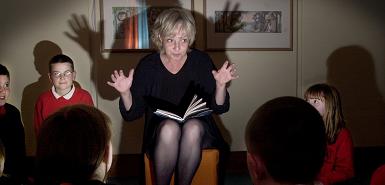
Once upon a time, in the spiffing 1950s, characters in children’s books enjoyed wonderful adventures after which they all lived happily ever after. By contrast, reality weighs heavily on today’s young readers, a former children’s laureate has warned.
Anne Fine said that cozy tales in which children’s characters looked forward to future adventures had been replaced by gritty stories that offered no hope for their weary protagonists. Contemporary literature is dauntingly bleak, with depressing endings that do little to inspire.
“In the Fifties, when a strong child was dealing with difficult circumstances, there was always a rescue at the end of the book and it was always a middle-class rescue,” she said.
“The child would win a scholarship to Roedean or something, and go on to do very well. That was felt to be unrealistic and so there was a move away from that. Books for children became much more concerned with realism, or what we see as realism.
“But where is the hope? How do we offer them hope within that? It may be that realism has gone too far in literature for children. I am not sure that we are opening doors for children who read these books, or helping them to develop their aspirations.”
The bestselling writer made her comments at Compelling Novels, Vulnerable Children, an event organized by the umbrella group Children in Scotland for the Edinburgh Book Festival. She told The Times that she did not wish to see a return to the standards of Enid Blyton, but that she was worried about the effect that gloomy books can have on children. “I can’t see how we roll back from this without returning to the sort of fiction that is no longer credible — books with a Blyton-ish view of things.”
Her concerns were not shared by Anthony Browne, the current Children’s Laureate, who believes that a lot of children’s literature remains upbeat. “There are both types of endings, happier and unhappier. I prefer open endings. I don’t think we are living in an age of depressing, dark endings. If you look at Jacqueline Wilson, she does deal in gritty realism, but her books don’t lack aspiration.”
Fall Forecast: Dan Brown and Cautious Otimism
by Hillel Italie, AP
Just in time for an especially crowded fall, business seems to be picking up for books. Or at least declining less.
"I feel most people are cautiously optimistic, now that we seemed to have turned a corner," says Simon & Schuster Inc. CEO Carolyn Reidy, who says the past two months have improved noticeably over a rough first half of 2009. "It's not that we're back to the extremely strong sales of more than a year ago, but we're trending upward. After taking our expectations down for so long, we're finally taking them up."
"Cautious optimism, that's the right phrase," says Jonathan Burnham, publisher of the Harper imprint of HarperCollins, which had an especially poor second quarter of 2009. "One never knows when we're completely out of the woods, but there's a sense of gradual upward progress." The Association of American Publishers, which had been reporting declines for much of the year, finally had some good news last week, announcing a 21.5 percent sales increase for June. Barnes & Noble Inc., which has been hurt by online competition and discount stores, reported a 5 percent revenue drop for the three months ending Aug. 1, but expects a smaller decline in the fall.
After months when Stephenie Meyer appeared the only author anyone wanted to read, publishers and booksellers have noted new hits such as Thomas Pynchon's "Inherent Vice," Richard Russo's "That Old Cape Magic" and Pat Conroy's "South of Broad."
"We were down 20 percent this summer, which I used to think of as horrible. But we were down 35 percent in the spring," Barry Leibman, co-owner of Left Bank Books in St. Louis, says. "It's a bumpy road, but I am having a little more sense of confidence."
"It's still quite a difficult marketplace ... but there's clearly a little bit more enthusiasm," John Sargent, CEO of Macmillan, says. "In the first six months, you basically had just the Stephenie Meyer books and a few others working. Now what you're seeing is a broader spectrum working better."
Canadian Publisher Kunati Books Halts Operations
Two years after being named Publisher of the Year by ForeWord Magazine, Kunati Books has closed for business. Publisher Derek Armstrong confirmed in a brief telephone conversation this morning that the company has begun winding down its operations and letting authors know of the situation.
"It's an orderly and friendly wind-down," Armstrong said, who singled out that the difficult economic climate made it a "bad time for business." He also indicated that further information would be available in a week or so but promised that authors would have the rights to their work revert back fully to them. Cheryl Kaye Tardif, whose novel Whale Song was published by Kunati, indicated that she and other writers had heard of the situation from Kunati editor James McKinnon.
Earlier this year Quill & Quire reported on up to 20 authors published by Kunati who had not been paid for their work in the previous nine months.
The New Thing: Books without Jackets
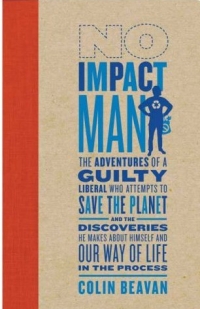
September will see the publication of three unusual-looking books: Farrar, Straus and Giroux's No Impact Man by Colin Beavan, Viking's Bicycle Diaries by former Talking Head David Byrne, and Graywolf's The Adderall Diaries by Stephen Elliott. What makes these books so unusual-looking is that, even though they're hardcovers, their cover art is not printed on dust jackets but instead stamped directly onto the boards that hug their pages. The result is a handsome, eye-catching look that reflects a heightened awareness on the part of publishers that books these days cannot be counted on to simply sell themselves.
"At a time when there are other forms that people can buy books in, it becomes more important than ever for the physical book to look really attractive," said Viking's Paul Slovak, comparing the embossed orange linen case-wrap that houses Bicycle Diaries to the front of an old composition notebook. "It goes back to this point that people make, that when you have an e-book you kind of just own the file."
Most of the publishers experimenting with jacketless hardcovers, including Viking, FSG, and Graywolf, are consciously taking their cues from the folks at McSweeney's, who have been putting out beautiful books designed in this style for years. For Eli Horowitz, the managing editor at McSweeney's, the method is a means of restoring some of the permanence and singularity to the book as object.
More on Publishing from Agent Georges Borchardt
The latest in Jofie Ferrari-Adler's series of interviews for Poets & Writers is with literary agent Georges Borchardt. Over a fifty-year career he's represented authors ranging from Tennessee Williams, Aldous Huxley, Samuel Beckette, T. C. Boyle, Robert Coover, David Guterson, Anne Applebaum, Stanley Crouch yet is deemed a "hidden gem" in the publishing industry for being "cherished by their colleagues and peers but barely known outside of the business."
On why his background is different from others in publishing: "most literary agents in America have English as their native language. But I started out without knowing the language. I grew up in Paris. I was in France during the war, so I spent pretty much two years in hiding."
On meeting Robert Gottlieb, then a junior editor with Simon & Schuster: "He knew French, and his French was particularly fluent if he'd had a drink. At one point later I was very impressed when he decided to memorize the whole of Valéry's "Le Cimetière Marin," which is a very long French poem. That was really quite impressive."
On trying to sell Elie Wiesel's Night, which eventually sold for $250 to Arthur Wang: "[N]obody wanted Night. I have a letter from Blanche Knopf saying something like, 'You're wasting your time with Elie Wiesel. He will never find an audience in this country.' I have a long letter from Kurt Wolff, which unfortunately says nothing. It says, 'You're right. This is a great book. Usually when you send a book you don't make many comments. I assume that if you're sending it, it means you feel we should publish it. In this case you said it's something we have to publish. And you're right. But for reasons that I'll explain to you the next time we have lunch, we just can't do it.'"
On how publishing really works, or is supposed to work: "You don't necessarily make the money out of the flavor of the month. The real money, if you're in it for the duration, comes from books like that--from books nobody wanted--be they by William Faulkner or Elie Wiesel or Beckett or many others. Unfortunately, that argument is totally unconvincing to publishers now."
On why the writer Borchardt most regrets not signing is Jhumpa Lahiri: "She would have been perfect for us and vice versa. She just did a marvelous interview with one of our authors, Mavis Gallant, for Granta. I got the impression that Mavis Gallant is her favorite author, and it sort of reopened the wound because I thought, 'Did I mention to her that we represent Mavis Gallant? Would that have made a difference?'"
His thoughts on the current state of memoir: "I'm certainly not in favor of lying. I think, basically, that nonfiction should be truthful. There are certain liberties that the reader will accept. It's a sort of silent covenant between the reader and the writer."
On the changes in publishing: "Mainly it's the shift from individual ownership to corporate ownership...It's totally different now. Not so much at Grove/Atlantic or Norton--those are two firms for which what I'm saying doesn't apply--except that they are competing against these giants. So if Grove/Atlantic has a book that becomes a major best-seller, it can't hold on to the author, even if the author has made lots of protestations about how he will never leave the firm because he's in love with all the people who work there... So they are affected by it too. The corporate thing has sort of poisoned the whole industry."
Who’d a Thunk It?
by Robert Hanks
Penguin’s Great Ideas series is too Eurocentric, too male – but at least it’s made it cool to pull a volume of Edmund Burke from your pocket.
Just over a year ago, the Bookseller announced the third and final series of Penguin Great Ideas. According to Adam Freudenheim of Penguin Classics, "Sixty [three batches of 20] feels like a lot of great ideas, and if you went beyond that, you would begin to be scraping the barrel." But here we are, a year on, with yet more Great Ideas coming out and plans in hand for a fifth series; and, it has to be said, there is little sense of any barrels having been scraped.
The series, which began in 2004, has been one of the conspicuous publishing triumphs of the new millennium. Penguin took a mixed bag of out-of-copyright texts - a bit of philosophy, a bit of political polemic, some belles-lettres - some of them obscure, none of them an obvious crowd-pleaser, and, with clever repackaging, turned them into a highly commercial proposition. Almost two and a half million books have been shifted so far. Simon Winder, publisher of Penguin Press, offers John Ruskin as an example of the series' success. The standard Penguin Classics selection of his writings, with an introduction and explanatory notes, sells a steady hundred or so copies every year; Ruskin's On Art and Life, the first of two selections published in Great Ideas, stripped of apparatus and given an attractive floral design, has sold 35,000 in five years.
Hyperion's Jones: "I Am the Wind of Change in the Book Industry"
For this week's paper, Pub Crawl interviewed a number of publishing people who started their careers in magazines, and got them talking about what they expected when they got into books and what surprised them once they got there. One of the people we spoke to was Barbara Jones, the former deputy editor of More magazine, who has been working at Disney Hyperion since the spring of 2008. Ms. Jones had a long career in magazines before she was recruited by Hyperion publisher Ellen Archer, having worked not only at More but also Harper’s, Vogue, Organic Style, and Real Simple. She is currently the editorial director of Hyperion and its women's literature imprint, Voice.
In the following Q&A, which has been edited for clarity, Ms. Jones talks about her easy adjustment from magazines to books, and discusses the ways in which she embodies the change currently rocking the book business.
Do you feel like you're still getting used to the book world at this point or have you pretty much settled in? I'm settling in. I liked it, and it seemed to suit me right away.
What moved you to make this transition in the first place? Actually, Ellen Archer called me. I hadn't thought of it, and the reaction of colleagues in magazine publishing was, 'Ah! That makes sense.' I don't think it's necessarily a transition for everyone, but I was always involved with books. It was my great love and people knew that.
What did you expect going in? Were there certain skills or habits you'd developed in your first act that you suspected wouldn't hold up in your second? Well, the primary skill, which is editing text, is transferable, so. There wasn't anything that wasn't transferable, really: editing, reading, working with writers, working with agents. The skills that I had were very transferable.
Did anything surprise you? The thing that surprised me was that everybody in book publishing reads books. That should seem obvious, but ... everyone in magazines does not read books. I read books, and people would talk to me about books. But ... in your sales force, in your publicity department, in your marketing department—in magazines their primary love is not books. In book publishing, I found myself in a land of my people. I joked to my friends that the maintenance men read a lot. I don't really know whether that's true or not, but …
One thing I've heard from other people is that they didn't realize the extent to which editing is just one part of what you do when you're in book publishing—that in many ways it's actually a sales job. I had come from women's magazines, where I did a lot of dealmaking. I booked covers. When you're booking a cover, that's a marketing tool for the magazine, and I brought that skill with me. For Voice, which is a mission-driven imprint, which is really quite unusual in book publishing, starting last summer I looked around and tried to find partnerships that could help support our books. We have a partnership ... for Candace Bushnell's books with Meredith Corporation, which publishes More magazine, and Maybelline cosmetics. We've gotten a lot of promotional support from them, and what we gave in return was content.
Bits & Bytes
FICTION Debut Michael Salvatore's BETWEEN BOYFRIENDS, pitched as a gay Sex and The City, to John Scognamiglio at Kensington, in a nice deal, for publication in June 2010, by Evan Marshall at the Evan Marshall Agency (World).
Mystery/Crime Dorothy Howell's boooks four, five and six Handbags and Homicide mystery series, to John Scognamiglio at Kensington, in a nice deal, by Evan Marshall at the Evan Marshall Agency (World).
Women's/Romance RWA Golden Heart winner Darynda Jones' FIRST GRAVE ON THE RIGHT and two subsequent novels featuring a heroine who is a private investigator and has a side job as a grim reaper, to Jennifer Enderlin at St. Martin's, in a six-figure deal, in a pre-empt, by Alexandra Machinist at Linda Chester (NA).
2009 Daphne Award winner Kylie Brant's books 4-6 in The Mindhunters series of dark romantic thrillers set within a private agency comprised of forensic profilers, seasoned investigators, and ex-FBI agents that contracts with local law enforcement on particularly high profile and puzzling crimes - again to Cindy Hwang at Berkley, in a very nice deal, by Danielle Egan-Miller at Browne & Miller Literary Associates (World English).
General/Other Lynn Shepherd's MURDER AT MANSFIELD PARK, a mischievous and clever reimagining of the Austen classic, to Hope Dellon at St. Martin's, by Ben Mason at Conville & Walsh (NA). UK/Commonwealth rights to Simon Petherick at Beautiful Books.
Children's: Picture book Kate Messner's ERNEST McSEAMONSTER WANTS TO GO HOME, the story of an unhappy seamonster's first day in a new school (of fish), again to Melissa Manlove at Chronicle, by Jennifer Laughran at Andrea Brown Literary Agency (World).
Children's: Young Adult Kerstin Gier's RUBY RED trilogy, in which a 16-year old discovers her family's time-travel gene when she mysteriously lands in the last century, to Laura Godwin at Holt Children's, in a good deal, by Alex Webb at Rights People, on behalf of Arena Verlag (NA).
Film Winner of the 2008 Commonwealth Writers' Prize Lawrence Hill's THE BOOK OF NEGROES, to producers Damon D'Oliveira and Clement Virgo, who will also direct, by Ellen Levine of Trident Media Group in association with Jody Hotchkiss of Hotchkiss & Associates.
Tish Cohen's INSIDE OUT GIRL, optioned to writing/producing team Steven Pearl and Allison Burnett, by Kassie Evashevski at UTA, on behalf of Daniel Lazar at Writers House.
NONFICTION Advice/Relationships Dr. Lissa Rankin's WHAT'S UP DOWN THERE?: Questions You Would Ask Your Gynecologist if She Was Your Best Friend, a comprehensive response to the common and not so common questions women have about their bodies, to Rose Hilliard at St. Martin's, at auction, for publication in Fall 2010, by Barbara Poelle at Irene Goodman Agency. Foreign: Baror International
HOW TO BE AN ADULT IN RELATIONSHIPS author David Richo's TRUST: Our Richest Gift, Our Deepest Fear, Our Greatest Challenge, exploring the role of trust throughout our emotional lives: how it develops in childhood and how it becomes an essential ingredient in healthy adult relationships, to Eden Steinberg at Shambhala (World).
Biography Ken Gire's ALBERT SCHWEITZER, a short biography in the "Christian Encounter" Series, this book will detail the inspiring life of a brilliant doctor who served the poor in Africa for much of his life, to Joel Miller at Thomas Nelson, in a nice deal, for publication in Winter 2011, by Greg Johnson at WordServe Literary Group (World).
History/Politics/Current Affairs Journalist and editor for Foreign Affairs, Newsweek International, and Foreign Policy William Dobson's book on the changing nature of modern dictatorship, telling the story of the hidden, unconventional battle between 21st century authoritarians and the dissidents that target their tyranny, arguing that authoritarian regimes have evolved amidst new technologies and changing definitions of political liberty, to Kris Puopolo at Doubleday, in a pre-empt, by Will Lippincott of Lippincott Massie McQuilkin (World).
How-To Carolyn Evans's FORTY BEADS: Beading Your Way to a Better Marriage, the story of how the author gave her husband the perfect gift for his fortieth birthday which transformed their marriage and revealed a method that anyone can use to do the same, to Jennifer Kasius at Running Press, by Amy Hughes at McCormick & Williams Literary Agency (world).
Humor Jason Kaplan's THINGS THAT SUCK, a humorous compendium of all things that rank high and low (bee stings, cankles, douche bags, Mondays) on the scale of suckitude, to Katie Anderson at Andrews McMeel, by Monika Verma at Levine Greenberg Literary Agency.
Parenting Gina Biegel's THE MINDFUL TEEN, drawing on the author's research, this book explains how the techniques of Mindfulness-Based Stress Reduction(MBSR)can be used with teens to help them overcome stress, anxiety, depression, and more, and I'M SO STRESSED OUT: Mindfulness for Teens, to Eden Steinberg at Trumpeter Books (World).
Religion/Spirituality Dr. Seyyed Hossein Nasr and Ramin Jahanbegloo's IN SEARCH OF THE SACRED: A CONVERSATION WITH SEYYED HOSSEIN NASR ON HIS LIFE AND THOUGHT, to Michael Wilt at Praeger, in a nice deal, by Stephen Hanselman at LevelFiveMedia (World).
|
More Breaking Book News
The following book-industry
news appears in real-time as it becomes
available in order to meet your ever-expanding need to know
what's happening (and to whom) on Publisher's Row.
| Books & Authors - MagPortal.com |
|
|