|
Bharati Mukherjee
 Born in Calcutta, India, on July 27, 1940,
into an upper middle-class Hindu Brahmin family surrounded by servants and
bodyguards:
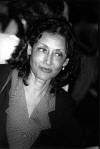
Indian-American novelist Bharati Mukherjee. The second
of three daughters of Sudhir Lal, a chemist, and Bina (Banerjee) Mukherjee,
she lived with nearly 50 relatives until the age of eight,
when she discovered the beauty and power of Russian novelists such as
Tolstoy and Dostoevsky. From an extraordinarily
close-knit and intelligent family, Mukherjee and her sisters were always
given ample academic opportunities and have all pursued academic endeavors
in their careers. In 1947, Mukherjee's father accepted a job in
England, and he brought his family to live there until 1951, providing
Mukherjee an opportunity to develop her English language skills. Born in Calcutta, India, on July 27, 1940,
into an upper middle-class Hindu Brahmin family surrounded by servants and
bodyguards:
Indian-American novelist Bharati Mukherjee. The second
of three daughters of Sudhir Lal, a chemist, and Bina (Banerjee) Mukherjee,
she lived with nearly 50 relatives until the age of eight,
when she discovered the beauty and power of Russian novelists such as
Tolstoy and Dostoevsky. From an extraordinarily
close-knit and intelligent family, Mukherjee and her sisters were always
given ample academic opportunities and have all pursued academic endeavors
in their careers. In 1947, Mukherjee's father accepted a job in
England, and he brought his family to live there until 1951, providing
Mukherjee an opportunity to develop her English language skills.
 One night, as her father entertained a group of American
scholars over dinner, he
asked, "I want [my] daughter to be a writer, where do I send her?"
They told him to send her to the Iowa Writer's Workshop at the University of
Iowa. So, after being graduated with a
B.A from the University of Calcutta and an M.A. in English and
Ancient Indian Culture from the University of Baroda in 1961, she came to
the United States of America, where she took advantage of a scholarship from
the University of Iowa. She planned to study there to earn her
Master's of Fine Arts before returning to India to marry a bridegroom of her
father's choosing in her class and caste. She earned her M.F.A. in Creative Writing in
1963 and her Ph.D. in English and Comparative Literature in 1969. One night, as her father entertained a group of American
scholars over dinner, he
asked, "I want [my] daughter to be a writer, where do I send her?"
They told him to send her to the Iowa Writer's Workshop at the University of
Iowa. So, after being graduated with a
B.A from the University of Calcutta and an M.A. in English and
Ancient Indian Culture from the University of Baroda in 1961, she came to
the United States of America, where she took advantage of a scholarship from
the University of Iowa. She planned to study there to earn her
Master's of Fine Arts before returning to India to marry a bridegroom of her
father's choosing in her class and caste. She earned her M.F.A. in Creative Writing in
1963 and her Ph.D. in English and Comparative Literature in 1969.
 While attending the university, she met a Canadian student
from Harvard. She impulsively married Clark Blaise, a Canadian writer,
in a lawyer's office above a coffee shop after only two weeks of courtship.
She received her M.F.A. that same year, and then she went on to earn her
Ph.D. in English and comparative literature from the University of Iowa in
1969. While attending the university, she met a Canadian student
from Harvard. She impulsively married Clark Blaise, a Canadian writer,
in a lawyer's office above a coffee shop after only two weeks of courtship.
She received her M.F.A. that same year, and then she went on to earn her
Ph.D. in English and comparative literature from the University of Iowa in
1969.
Mukherjee emigrated to Canada with her husband and became a naturalized
citizen in 1972. Her 14 years there were some of the most trying of
her life, as she found herself discriminated against and treated, as she
says, as a member of the "visible minority." She has spoken in many
interviews of her difficult life in Canada, a country that she sees as
hostile to its immigrants and one that opposes the concept of cultural
assimilation. Although those years were challenging, Mukherjee was
able to write her first two novels, The Tiger's Daughter (1971) and
Wife
(1975) while working up to professorial status at McGill
University in Montreal. During those years, she also collected many of
the sentiments found in her first collection of short stories, Darkness
(1985), a collection that in many stories reflects her mood of cultural
separation while living in Canada.
 Tired
of her struggle to fit into Canadian life, Mukherjee and her family moved to
the United States in 1980, where she was sworn in as a permanent U.S.
resident. In 1986, she was awarded a National Endowment for the Arts grant.
After holding several posts at various colleges and universities, she
eventually settled in 1989 at the University of California-Berkeley.
Because of the distinctly different experiences she has had throughout life,
she has been described as a writer who has lived through several phases of
life. First, as a colonial, then as a National subject in India.
She then led a life of exile as a post-colonial Indian in Canada.
Finally, she shifted into a celebratory mode as an immigrant, then citizen,
in the United States. She now fuses her several lives and backgrounds
together with the intention of creating "new immigrant" literature. Tired
of her struggle to fit into Canadian life, Mukherjee and her family moved to
the United States in 1980, where she was sworn in as a permanent U.S.
resident. In 1986, she was awarded a National Endowment for the Arts grant.
After holding several posts at various colleges and universities, she
eventually settled in 1989 at the University of California-Berkeley.
Because of the distinctly different experiences she has had throughout life,
she has been described as a writer who has lived through several phases of
life. First, as a colonial, then as a National subject in India.
She then led a life of exile as a post-colonial Indian in Canada.
Finally, she shifted into a celebratory mode as an immigrant, then citizen,
in the United States. She now fuses her several lives and backgrounds
together with the intention of creating "new immigrant" literature.
Known for her playful and well developed language, Mukherjee rejects the
concept of minimalism, which, she says, "is designed to keep anyone out with
too much story to tell." Instead, she considers her work a celebration
of her emotions and herself a writer of the Indian diaspora who cherishes
the "melting pot" of America. Her main theme throughout her writing
discusses the condition of Asian immigrants in North America, with
particular attention to the changes taking place in South Asian women in a
new world.
 While
the characters in all her works are aware of the brutalities and violence
that surround them and are often victimized by various forms of social
oppression, she generally draws them as survivors. Mukherjee has been
praised for her understated prose style and her ironic plot developments and
witty observations. As a writer, she has a sly eye with which to view
the world, and her characters share that quality. Although she is often
racially categorized by her thematic focus and cultural origin, she has
often said that she strongly opposes the use of hyphenation when discussing
her origin, in order to "avoid otherization" and the "self-imposed
marginalization that comes with hyphenation." Rather, she prefers to
refer to herself as an American of Bengali-Indian origin. While
the characters in all her works are aware of the brutalities and violence
that surround them and are often victimized by various forms of social
oppression, she generally draws them as survivors. Mukherjee has been
praised for her understated prose style and her ironic plot developments and
witty observations. As a writer, she has a sly eye with which to view
the world, and her characters share that quality. Although she is often
racially categorized by her thematic focus and cultural origin, she has
often said that she strongly opposes the use of hyphenation when discussing
her origin, in order to "avoid otherization" and the "self-imposed
marginalization that comes with hyphenation." Rather, she prefers to
refer to herself as an American of Bengali-Indian origin.
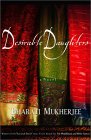
Most recently, Mukherjee is the author of
The Holder of the World (1993) and Desirable Daughters (2002).

Discover Bharati Mukherjee
at Amazon.com
Indulge
Yourself - Check Out Today's Best-Selling
Fiction -
Nonfiction -
DVDs |


