|
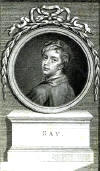
John Gay
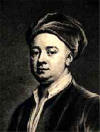 September 16 is the birthday of English poet and dramatist, friend of
Pope and Swift, John Gay. He is best known for his play, The Beggar's
Opera (1728), which was the basis for Kurt Weil and Bertold Brecht's
classical work, The Threepenny Opera. Gay's play was very successful,
earning him a great deal of money that, in turn, allowed him to pursue two
of his passions, drinking and gambling.
The play's sequel, Polly, was suppressed by British prime minister Robert
Walpole, which, of course, only made it that much more sought after. September 16 is the birthday of English poet and dramatist, friend of
Pope and Swift, John Gay. He is best known for his play, The Beggar's
Opera (1728), which was the basis for Kurt Weil and Bertold Brecht's
classical work, The Threepenny Opera. Gay's play was very successful,
earning him a great deal of money that, in turn, allowed him to pursue two
of his passions, drinking and gambling.
The play's sequel, Polly, was suppressed by British prime minister Robert
Walpole, which, of course, only made it that much more sought after.
Let us drink and sport to-day,
Ours is not to-morrow:
Love with youth flies swift away,
Age is naught but sorrow.
Dance and sing,
Time's on the wing,
Life never knows the return of spring.
- The Beggar's Opera
Born in 1685 at Barnstaple in Devon during the reign of Charles II, Gay was the youngest son of William
Gay. His parents died at a young age, and he was raised by an uncle,
the Reverend John Hammer. He was educated at Barnstable Grammar
School, after which he began life as an an apprentice to a London silk
dealer.
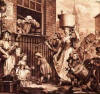 But such work was not Gay's forte, and he soon found his way
to London's literary and social circles. In 1712-14, he worked as a
steward in the household of the Duchess of Monmouth. Then, through the
sponsorship of
Jonathan Swift, Gay joined the household of Lord Clarendon, the Tory Party's
envoy to Hanover, with whom he journeyed to the Continent. Gay's
friendly and ingratiating manner won over many friends, not a few of whom
were courtiers who found employment for him, either in their own households
or with the Government. But when Queen Anne died and the Tory government failed, Gay was on his own. But such work was not Gay's forte, and he soon found his way
to London's literary and social circles. In 1712-14, he worked as a
steward in the household of the Duchess of Monmouth. Then, through the
sponsorship of
Jonathan Swift, Gay joined the household of Lord Clarendon, the Tory Party's
envoy to Hanover, with whom he journeyed to the Continent. Gay's
friendly and ingratiating manner won over many friends, not a few of whom
were courtiers who found employment for him, either in their own households
or with the Government. But when Queen Anne died and the Tory government failed, Gay was on his own.
After losing a
small fortune in a South Seas trading company deal, Gay was appointed
Lottery Commissioner, a post he held nearly to the end of his life. He
never married, choosing to divide his time between friends, who included the
Duke and Duchess of Queensberry and members of the Scriblerians, including
Swift and Pope.
Gay's first publication was the poem, Wine, in 1708. It was followed three years
later by the pamphlet, The Present State of Wit. Around the same time,
he met Pope and began inhabiting the fashionable coffee houses around town.
He dedicated his first important poem, The Rural Sports (1713), to Pope.
The long, meandering poem pokes fun at the "art" of hunting and fishing.
Gay then wrote his first satirical play, The What D'ye Call It, in 1716.
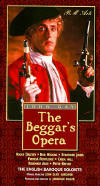 The Beggar's Opera was first performed when the author was 43. John Pepusch, a German musician, wrote popular songs for the play. The
oft-imitated story
of highwaymen and corrupt law-keepers is popular even today. Its sequel,
Polly (1729), was published with the help of the Duchess of Queensberry. The Beggar's Opera was the
earliest of the ballad operas written to be entertainment for the common
citizenry, as opposed to high art. Ballad operas advance the story by
interspersing prose with songs. Gay's work, a satire of corrupt
government, was a thinly veiled attack on Britain's ruling party and Prime Minister Robert
Walpole, who had placed several unpopular restrictions on the theater.
Polly was banned outright. The Beggar's Opera was first performed when the author was 43. John Pepusch, a German musician, wrote popular songs for the play. The
oft-imitated story
of highwaymen and corrupt law-keepers is popular even today. Its sequel,
Polly (1729), was published with the help of the Duchess of Queensberry. The Beggar's Opera was the
earliest of the ballad operas written to be entertainment for the common
citizenry, as opposed to high art. Ballad operas advance the story by
interspersing prose with songs. Gay's work, a satire of corrupt
government, was a thinly veiled attack on Britain's ruling party and Prime Minister Robert
Walpole, who had placed several unpopular restrictions on the theater.
Polly was banned outright.
As with Fielding's Jonathan Wild the Great (1734), Gay's work was a mock
heroic set in the London criminal underworld. The idea for the opera was
provided by Swift, who suggested that the morals of the people in London's Newgate
prison did not differ that much from those of polite society.
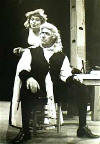 In the story, the
receiver of stolen goods, Peachum, has a profitable business arrangement
with Macheath, a highwayman. However, Peachum's daughter Polly falls in love
with the criminal. Peachum informs against Macheath, who is imprisoned in
Newgate, in order to collect the reward and to get rid of his son-in-law. The warden's daughter, Lucy Lockit, also
succumbs to MacHeath's charms, and Macheath uses that as an
opportunity to escape. Apprehended in a brothel, Macheath is saved
from the gallows at the last moment, when one of the players secures his
release. In the story, the
receiver of stolen goods, Peachum, has a profitable business arrangement
with Macheath, a highwayman. However, Peachum's daughter Polly falls in love
with the criminal. Peachum informs against Macheath, who is imprisoned in
Newgate, in order to collect the reward and to get rid of his son-in-law. The warden's daughter, Lucy Lockit, also
succumbs to MacHeath's charms, and Macheath uses that as an
opportunity to escape. Apprehended in a brothel, Macheath is saved
from the gallows at the last moment, when one of the players secures his
release.
BEGGAR. Through the whole Piece you may observe such
a Similitude of Manners in high and low Life, that it is difficult to
determine whether (in the fashionable Vices) the fine Gentlemen imitate
the Gentlemen of the Road, or the Gentlemen of the Road, the fine
Gentlemen. -- -- Had the Play remain'd, as I at first intended, it would
have carried a most excellent Moral. 'Twould have shown that the lower
sort of People have their Vices in a degree as well as the Rich: And that
they are punish'd for them.
- The Beggar's Opera
Among Gay's other works are his finest poem: Trivia; or the Art of
Walking the Streets of London (1716), a survey of the conditions of life
in the capital; The Shepherd's Weeks (1714), a series of mock-classical poems
in a pastoral setting; and Fables (1727-38), brief, satirical moral tales. Gay
also wrote the libretto for Händel's work, Acis and
Galatea.
 In his declining years, Gay lived mainly with two of his patrons, the
Duke and Duchess of Queensberry in Wiltshire. He returned to London in 1732,
where he died on December 4. In his own
epitaph, the writer held to his humorous outlook on life: In his declining years, Gay lived mainly with two of his patrons, the
Duke and Duchess of Queensberry in Wiltshire. He returned to London in 1732,
where he died on December 4. In his own
epitaph, the writer held to his humorous outlook on life:
Life is a jest, and all
things show it;
I thought so once, and now I know it."
Author, poet, and playwright John Gay is buried in London's
Westminster Abbey.
Discover John Gay
at Amazon.com
Indulge
Yourself - Check Out Today's Best-Selling
Fiction -
Nonfiction -
DVDs |


